

An interlocutor, Pete Olin, comments that “Sam Harris writes in his Free Will that “The popular conception of free will seems to rest on two assumptions: (1) that each of us could have behaved differently than we did in the past, and (2) that we are are the conscious source of most of our thoughts and actions in the present.”
Based on that definition, what would a cognitive system look like that does have free will?” and “If you don’t like Harris’ definition of what would constitute free will, what is a different better one?”
My response:
The “free will” discussion is one instance of a debate in philosophy that occurs either side of a line demarcating two approaches to modern analytical philosophy. There exists a language focussed approach (the linguistic school) and there exists a problem focussed approach (a critical rationalist school). It’s Ludwig Wittgenstein and his intellectual descendants (almost all of modern academic and institutionalised philosophy) versus Karl Popper (and some of the offshoots of that tradition). It’s the idea that solving “puzzles of language” can resolve (or dissolve) philosophical “pseudo-problems” versus the idea there really exist actual philosophical problems (like what the purpose of science is as compared to mathematics or morality and so on, what knowledge is and how it grows, what an explanation is, why persons are different to other creatures and how they are able to radically alter the world, whether causes can be fundamental and so on).
The free will debate splits neatly either side of this divide between a language focus versus a problem focus in philosophy.
From the linguistic side what happens with “free will” (Sam Harris’ take is emblematic and his articulation of it perhaps the most cogent) is that the problem is not a real one but rather an illusion of a kind - a ‘trick’ of language because that’s where the linguistic philosopher begins (and ends) the discussion - with language so they rule it out by definition. Free will is a “non-starter”, they say. And they mean it. Again: they begin with words and definitions and it’s all a very neat way to end the conversation. Avoid the problem: just put in neon lights “free will cannot be true by definition” (and in concert with the definition of determinism and so on). The linguistic philosophers - rightly - have no truck with violations of the excluded middle and so their logic seems inescapable. If free will by definition demands some events lay outside the causal chain, then free will cannot be possible in any world.
But again, to emphasise: that is all a concern about words, purporting to serve as something like elemental logical propositions when one looks closely at the moves being made. Such thinkers begin with the term “free will” and try to analyse what it really means. Having discovered the essence of free will and finding it in conflict with basic realism and logic they conclude: it would be technically irrational to endorse it.
This focus on what a word “really” truly, ultimately means is what Popper calls the approach or misconception of “essentialism”. And it is a misconception because science, philosophy and reasoning more broadly is not concerned about uncovering the ultimate “essences” of things. Rather the purpose of our creating knowledge of the world is to understand it in order to solve our problems. And we never get to “the end” because knowledge is conjectural. There will always be open questions because there are no discoverable essences in reality.
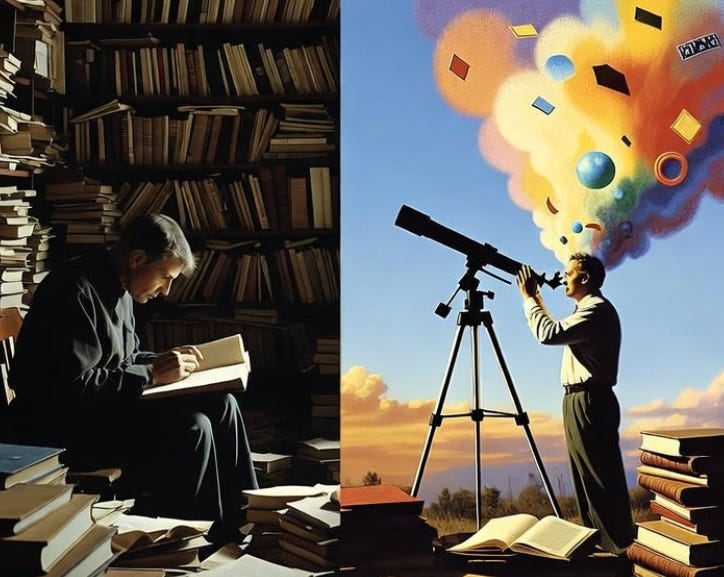
So let us change our approach in the way critical rationalism - the philosophical tradition advanced by Karl Popper - would suggest. Begin instead with the relevant problem (never mind the words being used). Let’s ask “Why are people unique? Why do they create things and bring new choices into the world? What is so different about people compared to animals or the technology people invent?” And so on. After all this is the only reason why anyone ever bothers to invoke “free will” - it is precisely because they have a problem driving them to understand something. And that something is persons.
So we do indeed have an interesting (and at this point open) genuine problem, or set of problems, before us. We need simply ask: What is a person, why are people unique so far as we know in this cosmos, and why do they choose what they choose to do? Now we can take the best tools of reason we have and approach these questions scientifically and philosophically. We can invoke “creativity” (and ask: how does that work?) and choice (are choices fixed? Or do people generate new ones as a consequence of their having produced knowledge?). Crucially: how do we decide among choices so generated?
For instance, we might consider how the choice to use nuclear power was not available to people prior to the discovery of the atomic nucleus and its constituent subatomic particles and the whole panoply of nuclear physics. Our knowledge of nuclear physics literally brings into reality new choices for people to select, should they choose. Choices that were not in the world before the creation of that knowledge and hence choices that could not possibly be made before the explanations were created by us. This may seem like basic logic but sometimes “the obvious” needs to be spelled out so we can get down to the fundamental ideas before making progress.
This argument for how it is knowledge of nuclear physics is the precondition for being able to choose to use nuclear power as a source of electricity obviously works for all other technology too. It applies to coal fired power, solar, wind and more to stick just with the choices before us for energy sources. The spectrum of choices before us grows in lockstep with progress in our scientific explanations and the technology and energy that rests upon it.
But where the knowledge comes from beyond waving our hands and saying “people” or “the mind” is both a real phenomena (knowledge is genuinely created) and a philosophical and scientific problem (how does any of that work in fine detail at the level of the mind?).
How are good explanations created? What is the process? And what is the process used to select among these old and new choices - especially at the level of the individual? A short-hand and true way of describing what is happening is the “exercise of individual free will”. We are not compelled by instinct to choose this or that and although the laws of physics determine all that happens anywhere anytime, those are not an *explanation of* what happens. But creativity and “free will” is a part of the story, the problem and future solution. We need terms to describe just how black-and-white different we are from other animals. If we are merely on a “cognitive continuum” with all other creatures, or the technology we invent, we will be at a loss to explain what is special about us because we are trapped in forever denying that we are. Yes, many try to argue “Humans are just a slightly more advanced kind of animal” or “A slightly more (or less!) intelligent LLM” - but those people are avoiding reality. It solves nothing to invoke continuums like that when it comes to “Why civilisation?” Or “Why science? Why music? Why morality? Why love?” and so on for all the unique features of modern humanity. It is little more than philosophical evasion to say “Well we’ve a little more cognitive capacity than a chimpanzee” or “A few more nodes than a deep learning network” and this grants us that little bit more intelligence to do what we do and what we think is special. But it’s not very special. That kinds of anti-human impulse is common these days but it solves nothing. There are genuine problems here and those are not solutions. It is no solution to point out all the ways we are similar to other systems (other animals, other systems that “compute” or other objects made of atoms). What we want is an account of the differences and in particular the unique features possessed only by persons.
So what is “free will” really? Again: that’s the wrong question. All questions of the form “What is X really?” are appeals to the misconception of essentialism and not the purpose of our creating ever better and deeper explanations. We cannot find the essence of things but we can incrementally and continually improve our understanding of any given phenomenon over time. Presently “free will” means something like “a person not compelled to choose but able to exercise their creative capacity to generate new options when required and select among them”. Hence the term “free will” describes a real process even if we cannot explain it in the form of an algorithm which could spell out how that process works. We could, of course, avoid using the term “free will” to avoid getting distracted by words (just as we could avoid using the term “choice” or “creativity” and so on) but we would still be left with both the phenomenon and substantive problem about how the unique capacities of human minds work scientifically (what is the code for a “person” or an AGI and so on allowing for this stark difference between persons and all other entities like apes and birds - governed entirely by instinct, and AI which slavishly follows its code). We people are different. And “free will” captures some of that mystery.
Curiously, when it comes to “consciousness” Sam Harris changes mode. Where others say that string of characters in scare quotes refers to nothing real (again a language focus) - Sam instead recognises a genuine problem. From the first person perspective he speaks of experience and the mystery of “the world being illuminated where one stands” as a genuine problem. How does all of that work? Why should anything seem any way at all? Why does consciousness exist and what is it?
I find this common. If one denies the “free will” problem it crops up in those same people as the “mystery of consciousness”.
Those who deny or downplay consciousness (say Daniel Dennett and others) then “free will” becomes a genuine problem worth exploring and trying to square with physics.
But it may be useful to admit that though we can say something and pose some of the questions well, we do not know much at the level of a precision science about these matters yet and a future philosophy of personhood (or mind) may find that free will, explanatory universality and creativity and consciousness are all facets of the same unified phenomenon. This is the conjecture David Deutsch outlines both in “The Fabric of Reality” and “The Beginning of Infinity”.
Some people behave as if they don't have (much) free will.
Free will can be improved.
@Andrew George